Barrier & Delineation Applications
Start with the job — not the product. Find the right pathway based on what you need to guide, separate, define or protect, then move into the application page that matches the requirement.
Already know the product? Browse Products →
What Are You Trying to Achieve?
Choose the pathway that best matches the dominant job on site. You do not need to know the Barrier Systems product name first.
Useful rule:
Start with what needs to move, stay separate, be defined or be protected. Product selection comes after that.
Traffic & Vehicle Delineation
Guide vehicle movement, define temporary traffic routes and make changed access or low-speed site layouts easier to understand.
Choose this when: the job is visual vehicle guidance and route definition.
Not the same as: tested vehicle containment.
Temporary Pedestrian Separation & Guidance
Create clear pedestrian routes, temporary walkways, detours and boundaries where people need to be guided or separated from surrounding activity.
Choose this when: pedestrian movement is the primary operating problem.
Not the same as: vehicle-impact protection or crowd restraint.
Tested Vehicle Redirective Protection
Use this pathway where the project requires a tested longitudinal barrier system designed to contain and redirect an errant vehicle.
Choose this when: tested containment is a defined project requirement.
Do not substitute: ordinary water-filled delineators for a tested barrier system.
Work-Area Separation Delination Barriers
Define active, restricted, maintenance, staging or operational areas that need a clear temporary boundary from normal site activity.
Choose this when: the work or operational area itself needs to be defined.
Not the same as: structural edge protection or tested vehicle containment.
Line Marking, Parking & Low Profile Dividers
Create, change or trial temporary parking and site layouts where a low-profile connected divider or general-purpose delineator suits the job.
Choose this when: temporary layout and geometry control is the primary need.
Not the same as: wheel stops, bollards or permanent parking access control.
One project can involve more than one application.
Start with the dominant operating problem, then identify any additional vehicle routes, pedestrian paths, work-area boundaries or containment requirements around it.
What Does the System Actually Need to Do?
The word “barrier” can describe very different jobs. Start with the function before comparing models, sizes or fill capacities.
Delineation Is Not the Same as Tested Containment
Delineation, Guidance & Separation
Use these functions to make a site layout clear and understandable.
- Define vehicle routes and changed access
- Create pedestrian walkways and boundaries
- Mark work and restricted areas
- Create temporary parking or layout geometry
Important: filled mass, height or a water-filled format does not automatically make an ordinary delineator a crash barrier.
Tested Vehicle Redirective Protection
This is a different safety function. Use this pathway where the project requires a tested longitudinal barrier system to contain and redirect an errant vehicle.
- Tested performance must match the project requirement
- Run length, terminals and lateral space matter
- Site and road-agency conditions still need confirmation
Different Sites Can Create Different Barrier Needs
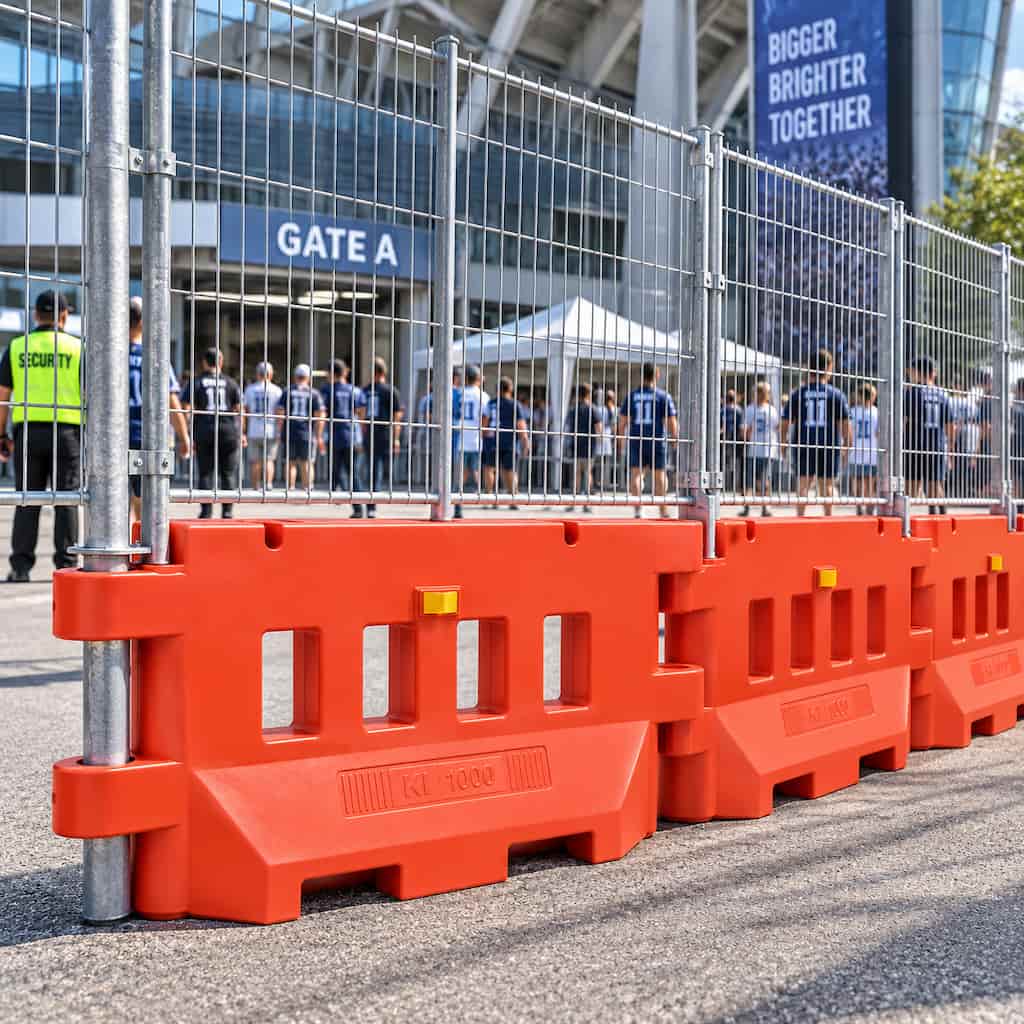
A roadworks project, construction site, car park or event can create very different barrier and delineation requirements. The right application comes from what the system actually needs to do.
Roadworks & Traffic
Routes, closures, pedestrian interfaces, work zones or tested containment may all exist on the same project.
Civil & Construction
Work areas, plant movement, temporary access and pedestrian routes can create different application needs.
Car Parks & Commercial Sites
Parking layouts may involve low-profile division, pedestrian guidance, traffic movement and temporary work areas.
Events & Venues
Temporary parking, pedestrian flow, restricted areas and vehicle access can overlap within one operating plan.
Industrial & Maintenance
Changing work zones may require temporary separation while normal pedestrian and vehicle activity continues nearby.
Utilities & Infrastructure
Linear works, access changes, excavations and maintenance areas can create several different delineation requirements.
What Determines Product Fit?
Choosing the application narrows the range. The actual product then depends on the requirement signals that matter on the site.
Geometry
Straight continuous run, gradual changes, tight corners or a flexible route? Connection geometry changes the fit.
Profile
Does the job specifically need low-profile layout control, or a taller boundary with greater visual presence?
Mass & Handling
Greater filled mass can suit more substantial static runs. Easier empty handling matters when layouts move frequently.
Fencing / Mesh
A more defined pedestrian or work-area boundary may require confirmed mesh or fencing provisions.
Visibility & Accessories
Signs, lights and other supported provisions may matter where visibility or site guidance needs to be strengthened.
Tested Performance
If the requirement is vehicle containment rather than ordinary delineation, move into the tested redirective protection pathway.
Know the Job, but Not the Product?
Use Help Me Choose when you can describe what you are trying to achieve but are not yet sure which application or Barrier Systems product fits best.
We’ll narrow the options around:
- Your application / what you need to achieve
- Straight or changing geometry
- Low-profile or standard-profile requirement
- Higher mass or easier handling
- Fencing, mesh, signs or light requirements
Already Know What You Need?
You do not need to restart the journey. Move directly to the layer that matches what you already know.
I Know the Application
Use the five application pathways above to go straight into the planning and product-fit guidance for that job.
I Know the Product
Skip application discovery and move directly to the Barrier Systems range, product specifications and purchase options.
Planning a Project
Already have an application or product in mind? Share your project details so we can help with the next step.
Choosing the Right Pathway
Focused answers to the questions that matter before you move into a specific application or product page.
Start with the dominant operating problem. If the main job is guiding vehicles, use Traffic & Vehicle Delineation. If it is creating pedestrian routes, use Pedestrian Separation. If you are defining an active or restricted work area, use Work-Area Separation. If the requirement is temporary low-profile layout control, use Line Marking, Parking & Low Profile Dividers. If the project requires tested vehicle containment, use Tested Vehicle Redirective Protection.
Traffic delineation provides visual guidance and route definition. Tested vehicle redirective protection is a different safety function used where a tested longitudinal barrier system is required to contain and redirect an errant vehicle. Ordinary delineators should not be treated as substitutes for a tested barrier system.
Pedestrian Separation starts with the pedestrian route or boundary: where people need to walk, detour or remain separated from surrounding activity. Work-Area Separation starts with the active or restricted work zone itself: what area normal site activity needs to stay outside. A real project may need both.
Yes. The application pages are decision pathways, not mutually exclusive project categories. A roadworks project, for example, may need traffic delineation, pedestrian separation, work-area boundaries and tested containment in different parts of the same site.
No. The application narrows the relevant range. Product fit still depends on requirement signals such as geometry, profile, filled mass, handling, fencing or mesh needs, supported accessories and whether tested containment is required.
Go directly to the Products page or the relevant product page. The Applications section is designed mainly for customers who know the job or site problem but still need help identifying the right product pathway.