Temporary Pedestrian Separation & Guidance
Create clear pedestrian routes, separate people from work areas and manage temporary layouts with systems suited to different site, handling, fencing and layout requirements.
Need tested vehicle protection rather than pedestrian delineation?
View Redirective Protection ➔
Pedestrian Separation for Real Site Conditions
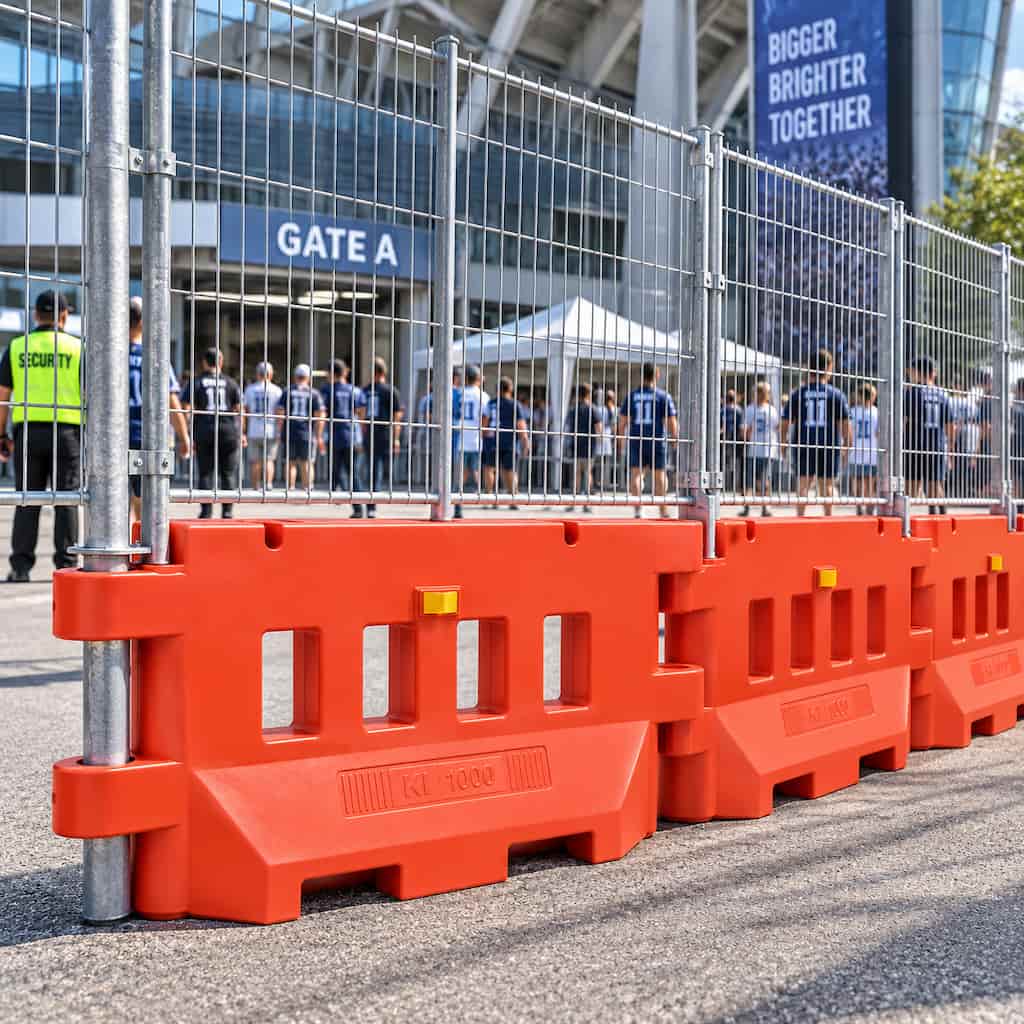
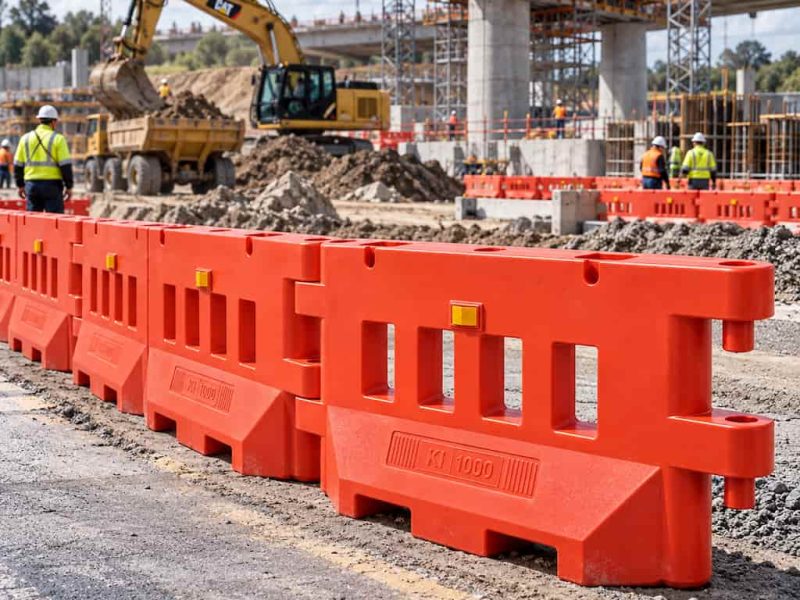
From temporary walkways to restricted work areas and changing event layouts, see where different pedestrian separation setups are commonly used.
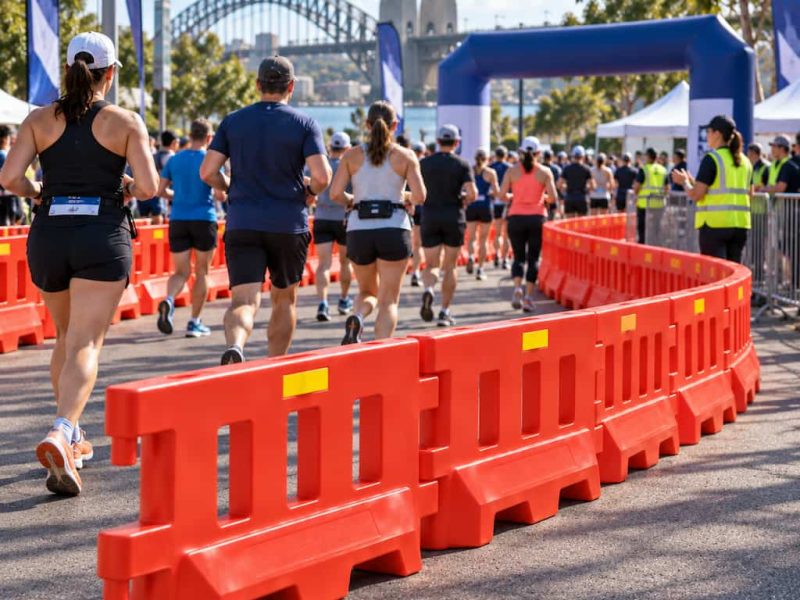
Plan the Route Before Choosing a System
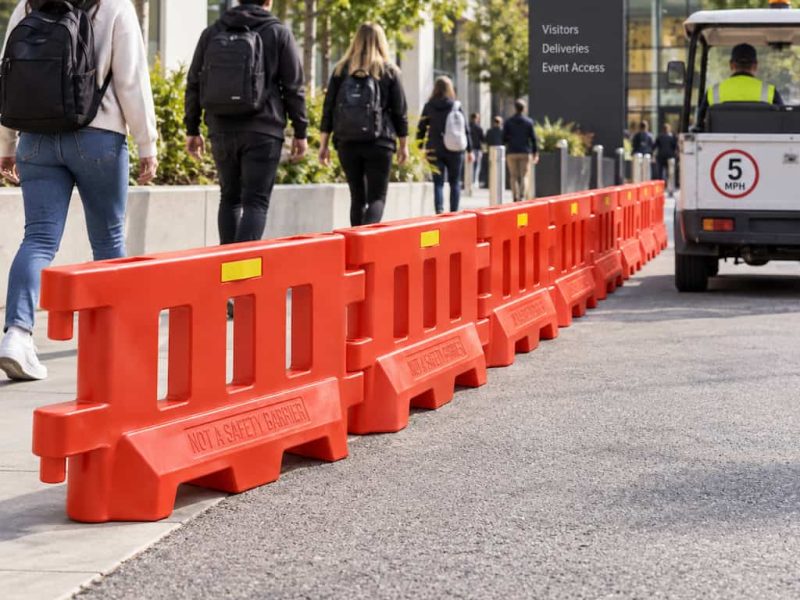
Before comparing systems, establish where pedestrians need to move, what they need to be separated from and what conditions the temporary route needs to accommodate.

01 — Where do pedestrians need to go?
Before comparing systems, define the route, surrounding activity and site conditions. These five checks help establish the type of pedestrian separation required.

02 — What are pedestrians being separated from?
Map where the route starts and finishes, including corners, crossings, entrances, openings and any access that needs to remain available.

03 — Who needs to use the route?
Identify nearby work areas, vehicle movements, equipment or restricted zones. This helps determine whether guidance, fencing or another control is required.

04 — What are the site conditions?
Review the surface, slopes, kerbs, drainage, available space, visibility and lighting, and confirm any site-specific approvals or requirements before finalising the layout.

05 — What Site or Compliance Requirements Apply?
Confirm any site-specific requirements, approvals or applicable standards before finalising the layout, particularly where the application is safety-critical.
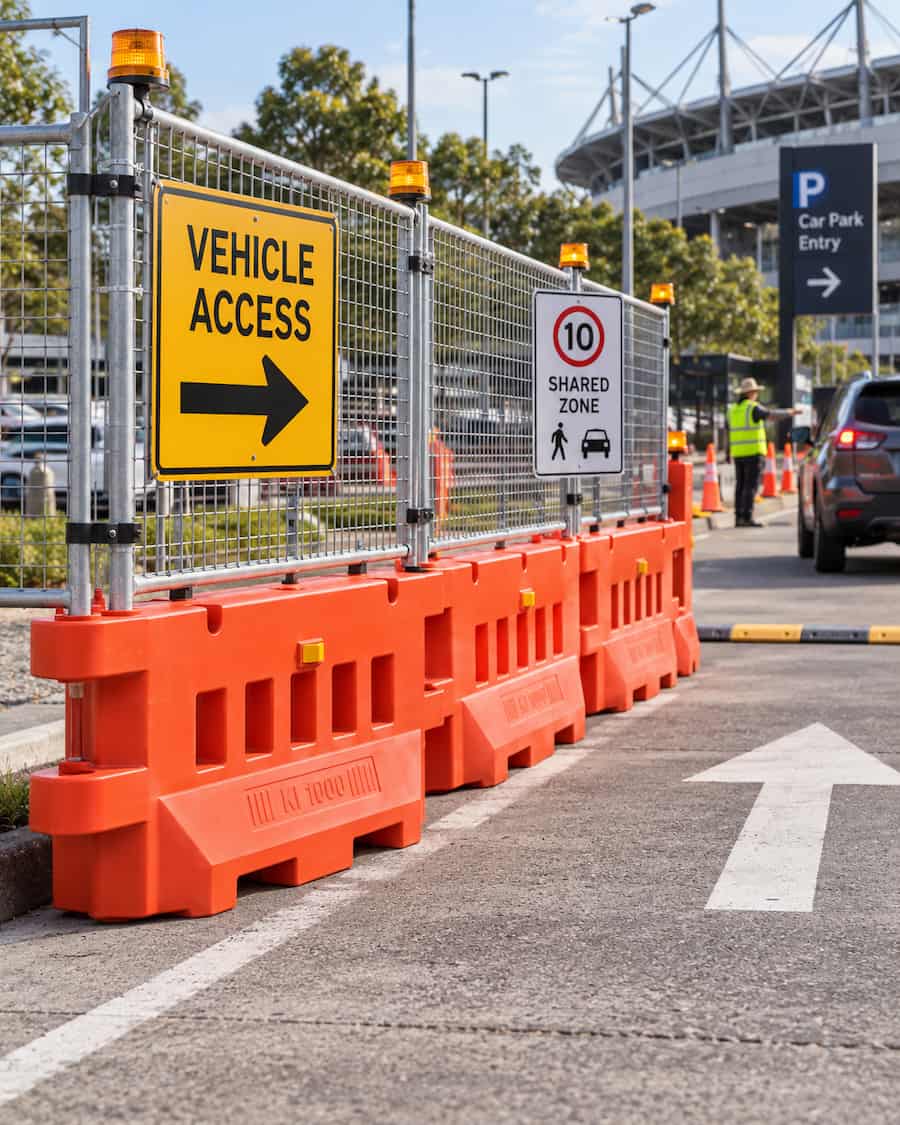
What Influences the Right Setup on Site?
Different sites have different demands. Route shape, handling needs, fencing or accessories, and whether low-profile guidance is enough will help determine which systems are suitable.
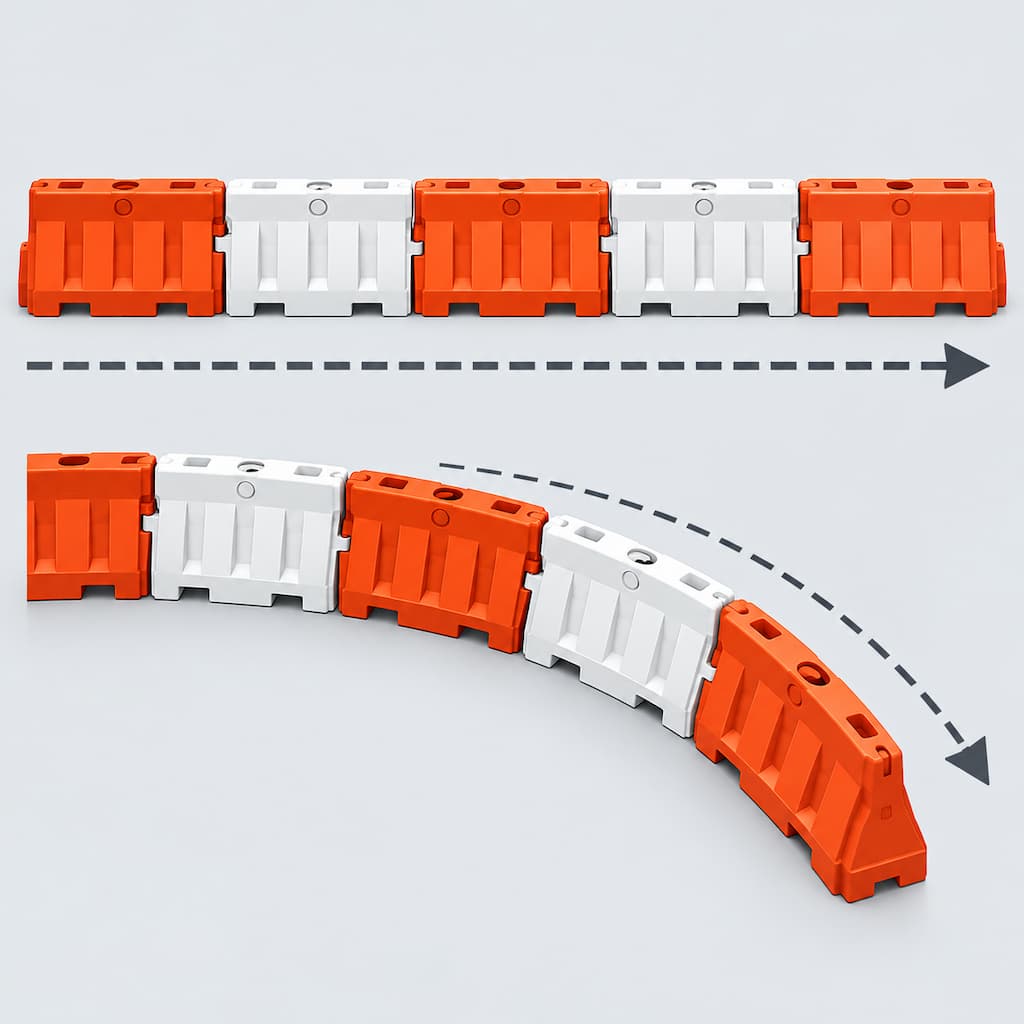
Straight or Flexible Layout?
Is your pedestrian route mostly straight, or does it need to follow curves, corners or changing directions across the site?
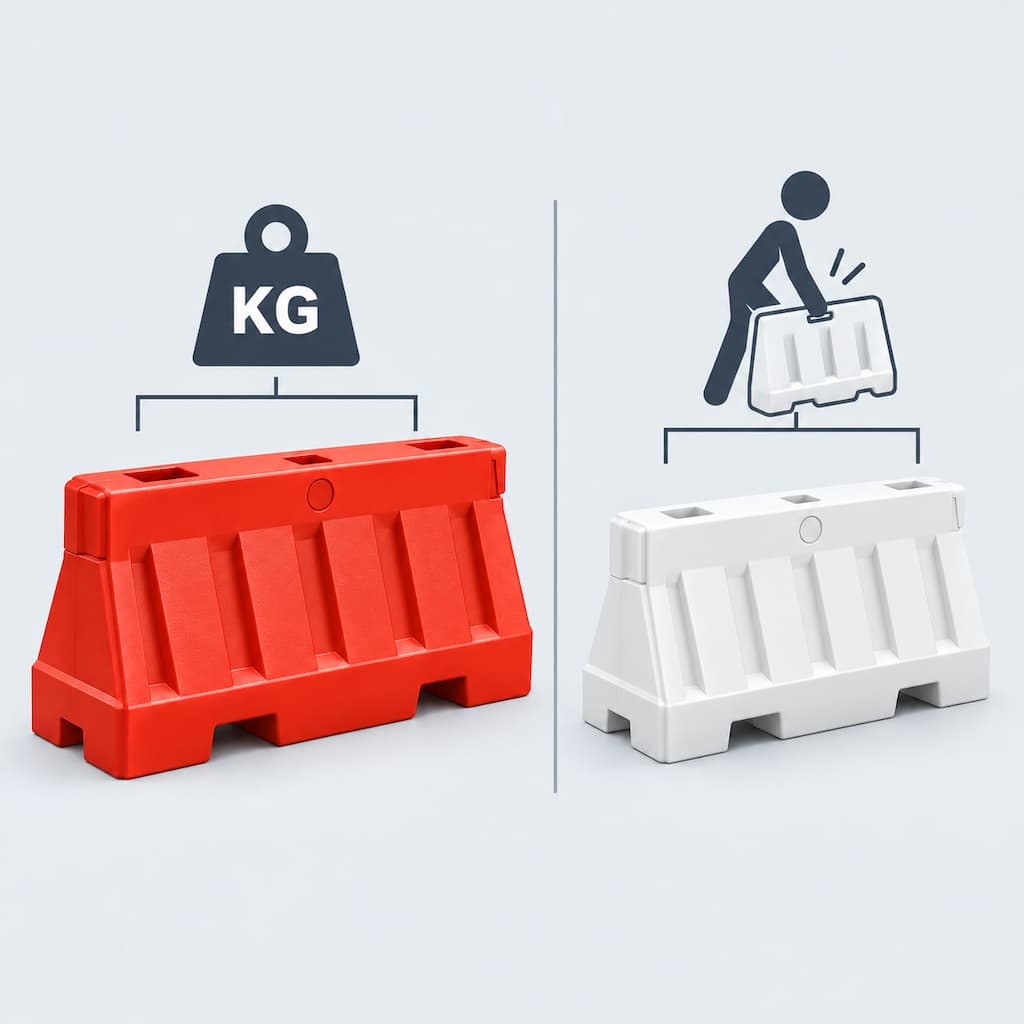
High Mass or Easy Handling?
Some sites need greater mass and stability. Others need lighter systems that are easier to move and reposition.
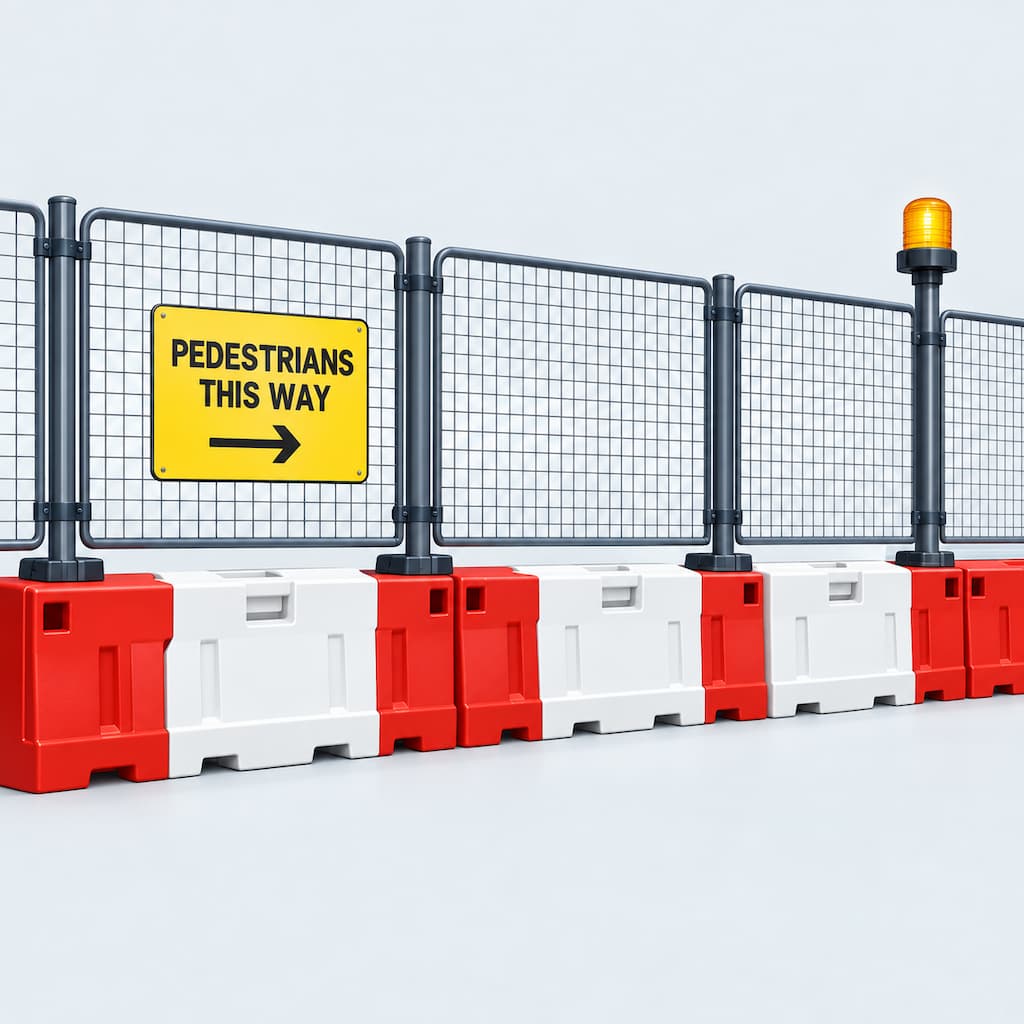
Fencing or Accessories?
Do you need mesh fencing, signs, lights or other supported accessories? This can narrow the suitable options straight away.
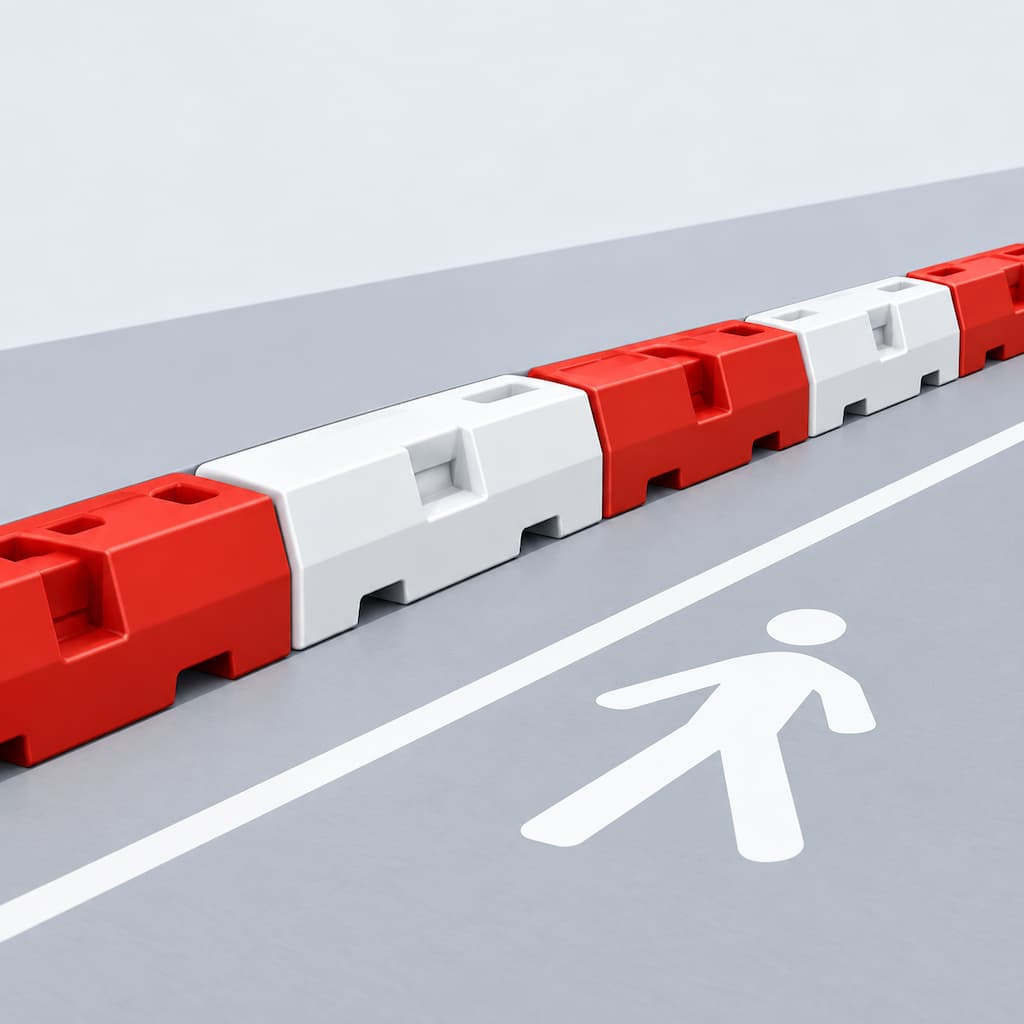
Low-Profile Guidance?
Would a low-profile solution be enough for clear guidance and layout control, or do you need a standard-height system?
Not sure which requirements matter?
If your site has specific layout, fencing, access or project requirements, tell us about the project and we’ll help narrow down the right option.



Compare Pedestrian Separation Systems
Compare the systems relevant to this application by route profile, handling, fencing and accessory support. Site conditions and the required type of separation should be established before final selection.
Aqua Stop
Aqua Stop suits pedestrian separation where greater filled mass and site presence are useful, with fencing and accessory options available where required.
✓ Greater filled mass and site presence
✓ Fencing / mesh supported
✓ Signs, lights and accessory provisions supported
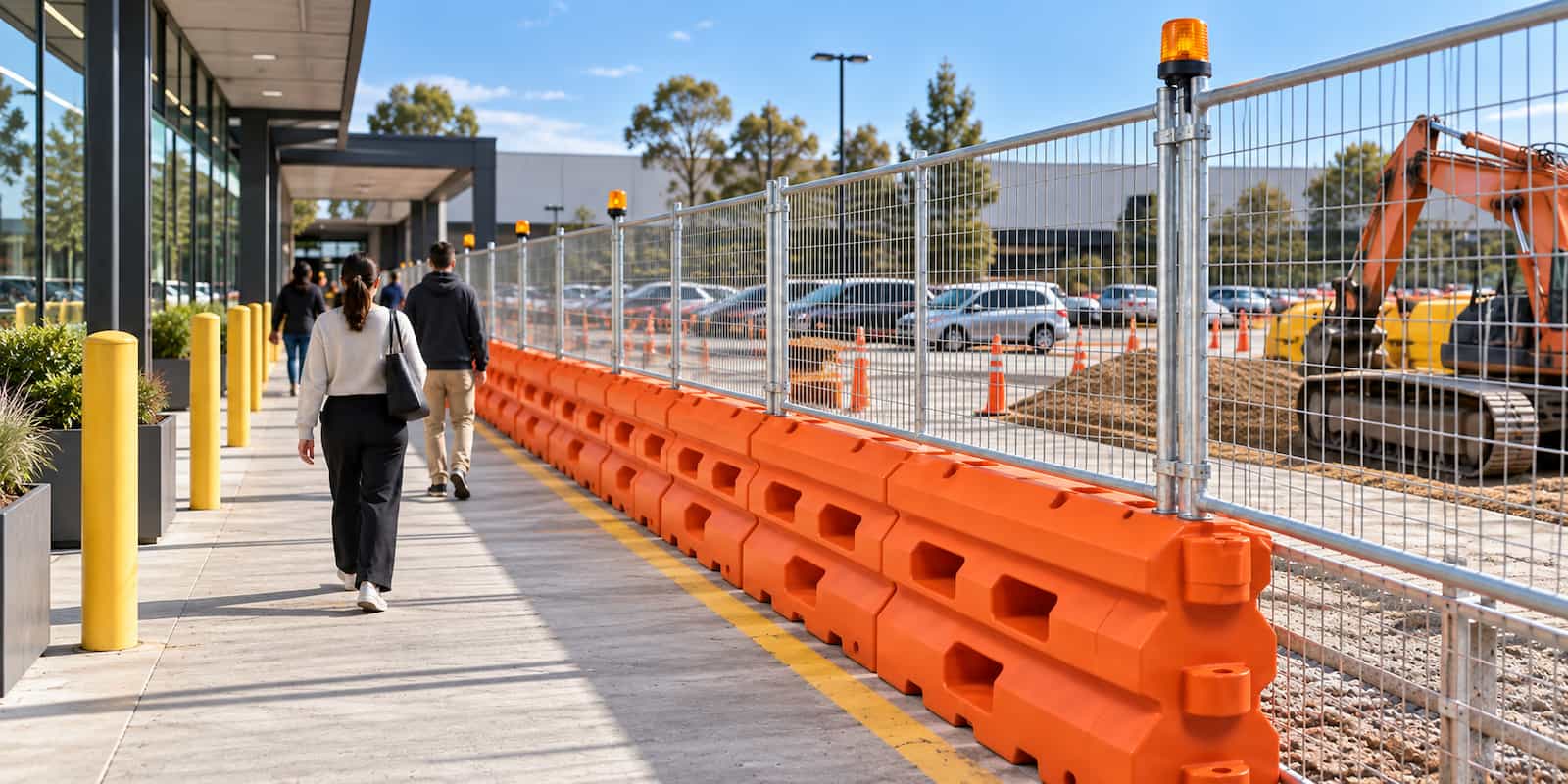
Higher mass / Demanding Sites
Fencing compatible
Signs & lights compatible
Water-fillable / High Capacity
KI-1000
KI-1000 suits pedestrian separation where the route needs to follow curves, corners or changing directions, with fencing and accessory options available where required.
✓ Flexible connected layouts
✓ Fencing / mesh supported
✓ Signs, lights and accessory provisions supported
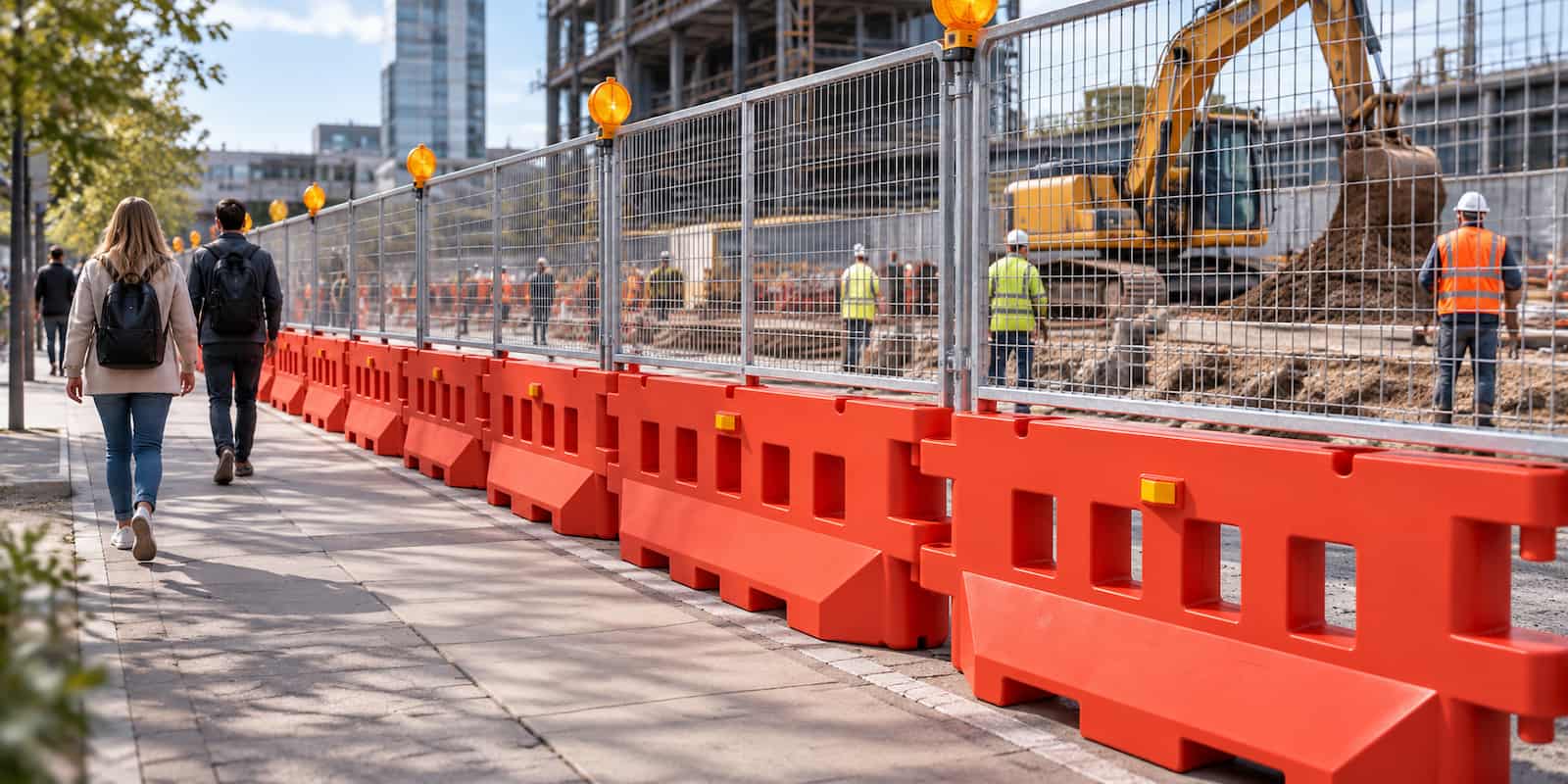
Flexible layouts
Fencing compatible
Accessories supported
Connected runs
KI-900
KI-900 suits pedestrian separation where a connected, flexible layout is needed without fencing or mesh, including routes with changes in direction.
✓ Flexible connected layouts
✓ Suits curves and changing directions
✓ No fencing / mesh provision
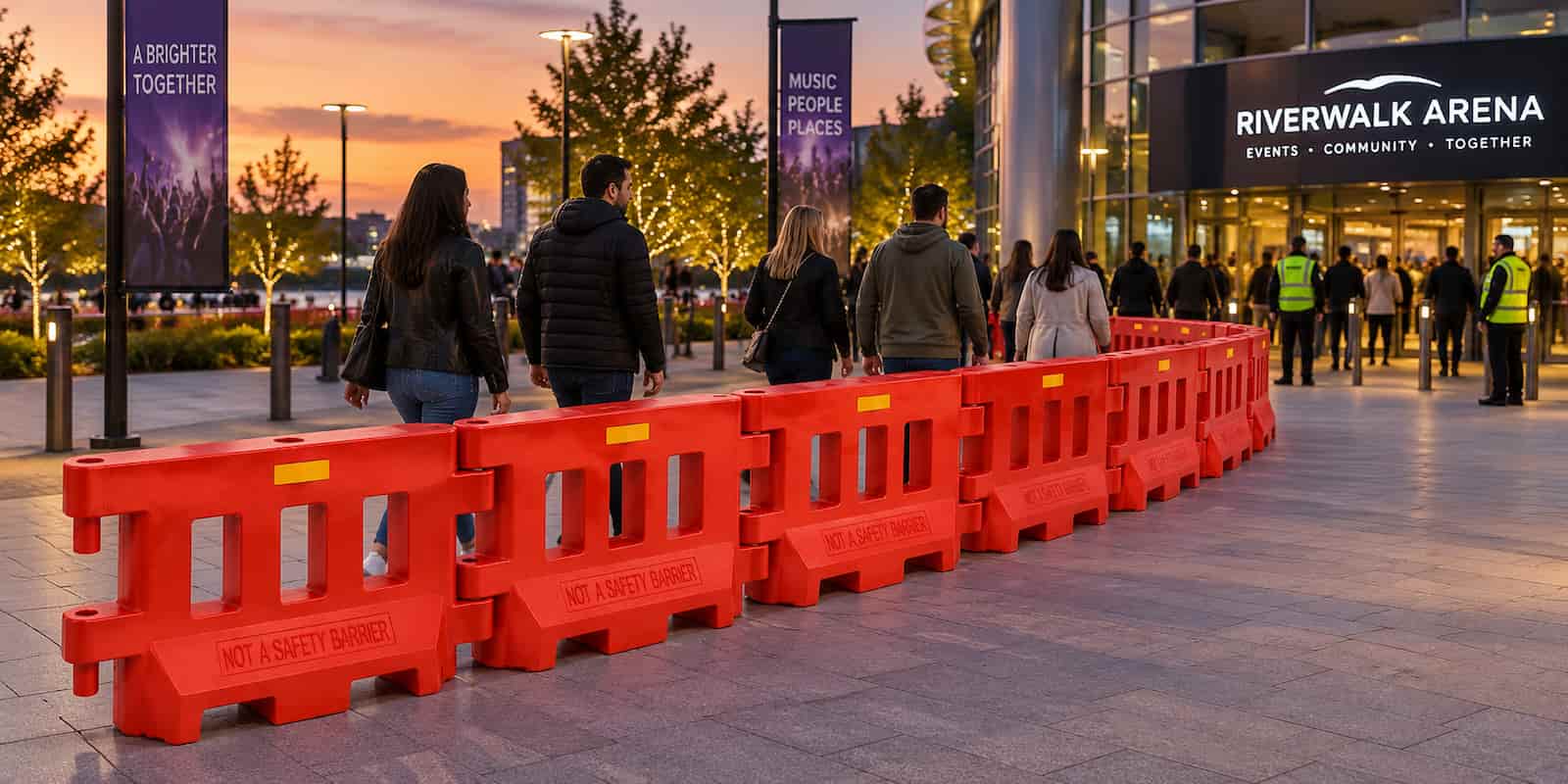
Flexible layouts
No fencing
Connected runs
Pedestrian guidance
TM-700
TM-700 suits pedestrian separation where the route is predominantly straight and a continuous low/no-snag run is preferred.
✓ Straight continuous runs
✓ Low/no-snag configuration
✓ Suits pedestrian and similar straight-run applications
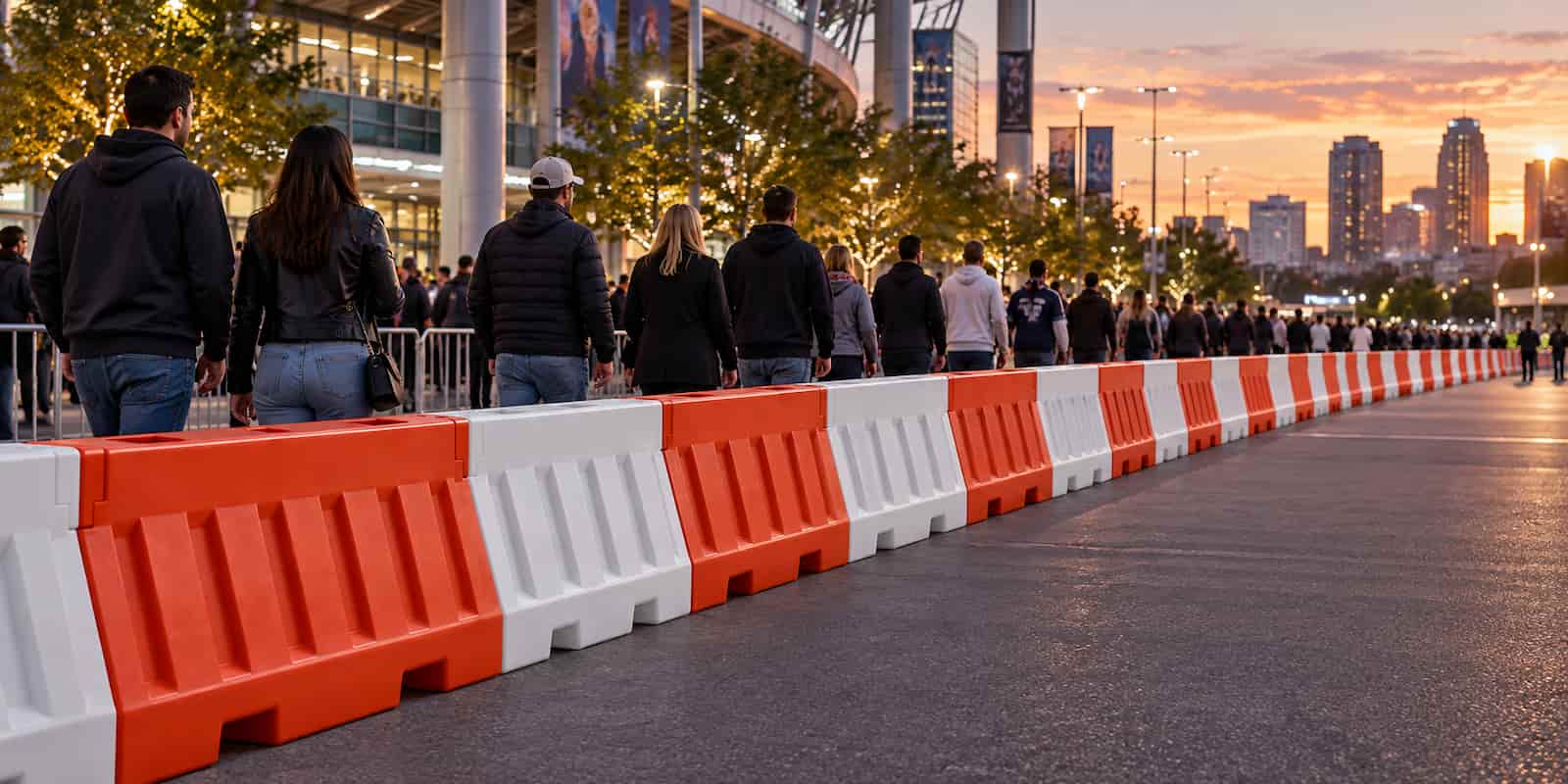
Straight runs
Fencing compatible
No-snag
Temporary guidance
TM-600
TM-600 suits smaller or simpler pedestrian-separation jobs where portability, easy transport and a more flexible layout are useful.
✓ Lightweight and easy to handle
✓ Easy to transport and reposition
✓ More flexible layout capability than TM-700
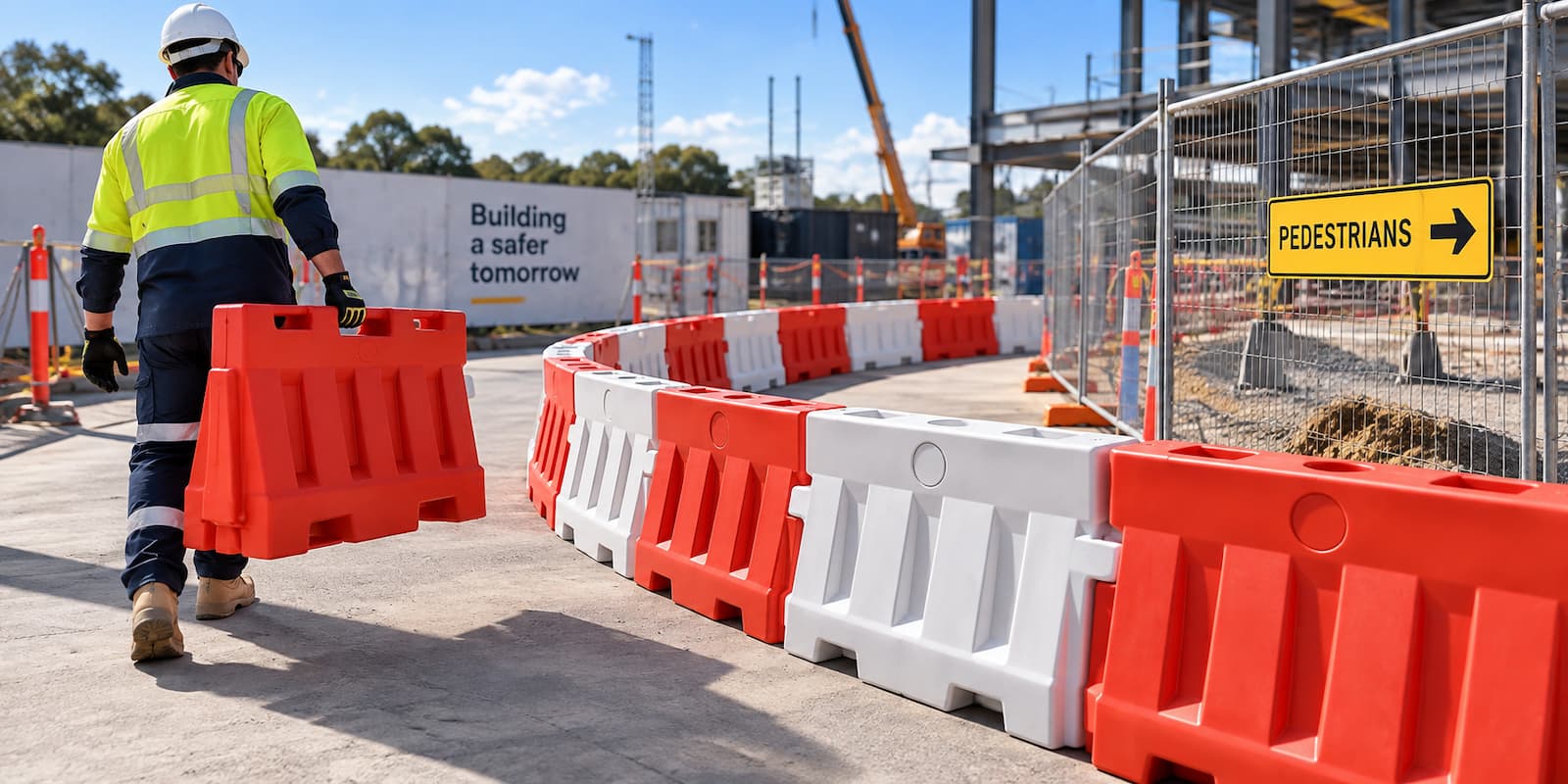
Higher mass / Demanding Sites
Fencing compatible
Signs & lights compatible
Water-fillable / High Capacity
TM-200
TM-200 suits pedestrian guidance where a full-height delineator is unnecessary, particularly for temporary routes, changing layouts and low-profile visual separation.
✓ Low-profile layout control
✓ Portable and easy to reposition
✓ Suits temporary pedestrian guidance
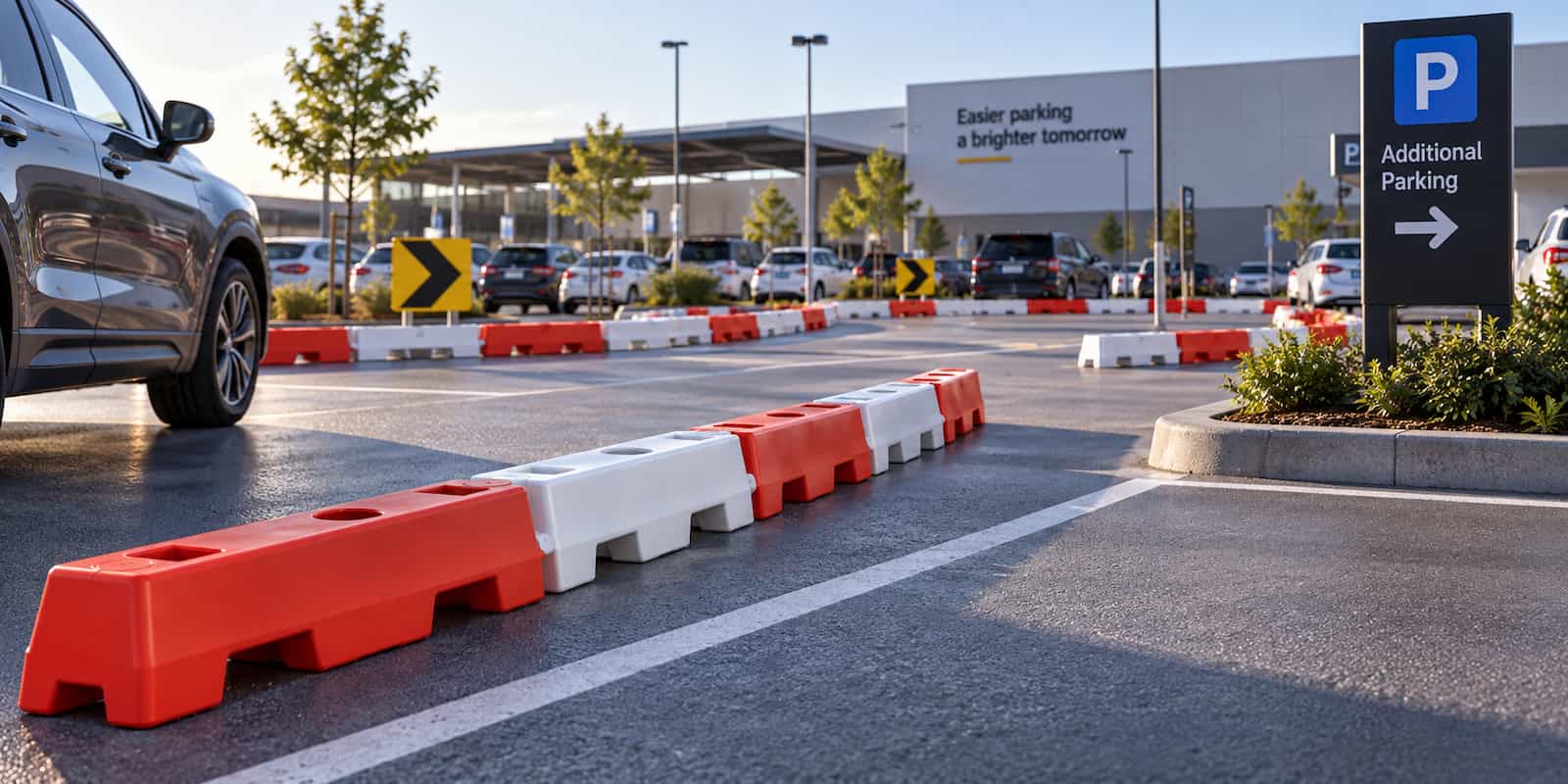
Low profile Line Marking
Portable Light-Weight
Parking Layout Control
Pedestrian Guidance
Temporary Pedestrian Separation FAQs
Quick answers to common questions about planning temporary pedestrian routes, choosing suitable systems and preparing for a project.
Not always. Some applications only need clear visual guidance and separation, while others benefit from a system that can support fencing or mesh. If fencing is required, choose a product specifically suited to that configuration and check the relevant product details before specifying the system.
They can be used for pedestrian guidance and separation in suitable low-speed or controlled environments, but ordinary delineators should not be treated as vehicle-containment systems. Where tested vehicle containment is required, a purpose-designed system such as SHIELD I should be considered instead.
Flexible connected systems such as the KI Series are better suited to layouts that need to follow curves, corners or changing directions. TM-600 can also suit more flexible layouts, while TM-700 is better suited to straight continuous runs.
Start with the total length of the route or separation run, then compare it with the effective connected length of the product you are considering. For longer or more complex layouts, Barrier Systems can help confirm quantities and suitable product selection before ordering.
Useful information includes the application, approximate run length or quantity required, whether fencing or mesh is needed, whether the route is straight or curved, relevant site conditions, and delivery location or timing requirements. This helps narrow the product choice and prepare a more useful project response.
Have a Quick Question?
Need a quick answer about a product, availability or which option may suit your needs? Send us a message and our team will get back to you.
- Product information
- Availability & lead times
- Advice on suitability
Planning a larger or more specific project?
For site assessments, system selection and quotes, please use our Project Quote.
STAY UP TO DATE
Get the latest product updates, project insights and industry news from Barrier Systems.
AUSTRALIAN MANUFACTURER

STANDARDS-AWARE PRODUCT GUIDANCE

PROJECT & SUPPLY SUPPORT


Australian made barrier and delineation systems that protect people, manage traffic and keep worksites moving.
AUSTRALIAN MANUFACTURER
STANDARDS-AWARE PRODUCT GUIDANCE
PROJECT & SUPPLY SUPPORT
Barrier Systems is brand of Q Solutions Co.
© 2026 Barrier Systems. All rights reserved.